
Okay, so sewing machines are not actual family members, and I don’t give them names (but no judgement on those who do, I am lousy with names at the best of times so no point adding more.…. but I do get very attached to them as much as any trusty tool. I attended a lecture some time ago about mental well being and crafting, and one of the takeaways was even just picking up your tools or project…you immediately feel calmer, and it pretty much summed up how I like using these machines.
I didn’t set out to collect machines, and I have set myself a limit (approx. 10) . It is partially the novelty factor, but I also love the ingenuity of the design, the personal histories (or herstory?) and how they represented economic independence for a lot of women in the early 1900s.
The ones here are the ones in my workroom and these are the ones I use on a regular basis, and in no particular order……
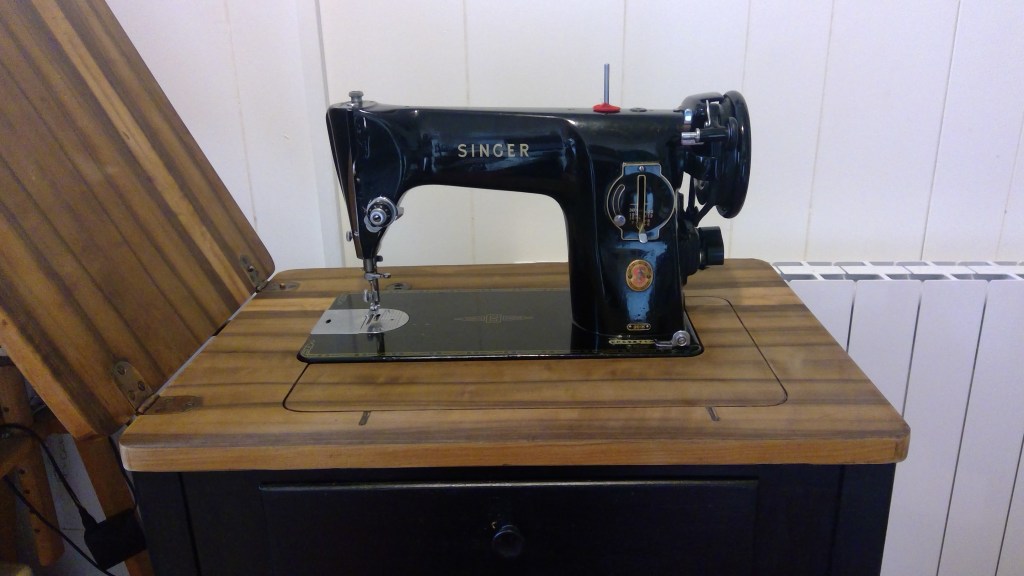


- This is a Singer 201 (1957) This machine is a straight stitch only and was considered the rolls Royce in its day. I use it for big flat sews as it sits in a table so a lot of fabric can be supported. It also works well with the vintage button holer. There is a lever on the underside which will drop the feed dogs for free motion embroidery and darning.
- I got this machine (or got my friend Mary in Wexford to pick it up) and it was in a broken carry case. I later got another 201 (no plug) in a table (which I asked my brother in law to pick up!! ) I tidied up the table and put this machine in it… and the other machine was sold on Done Deal!
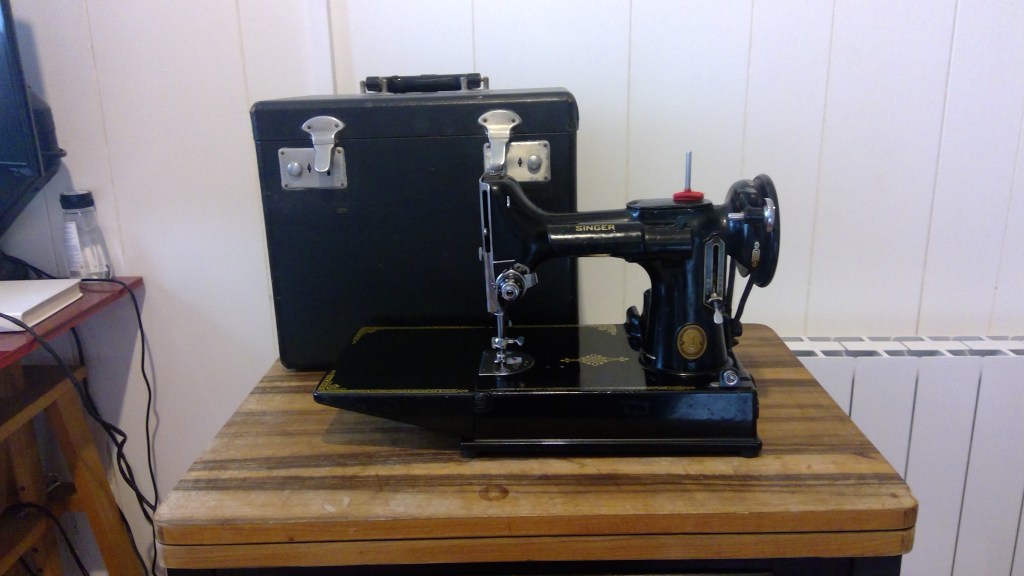
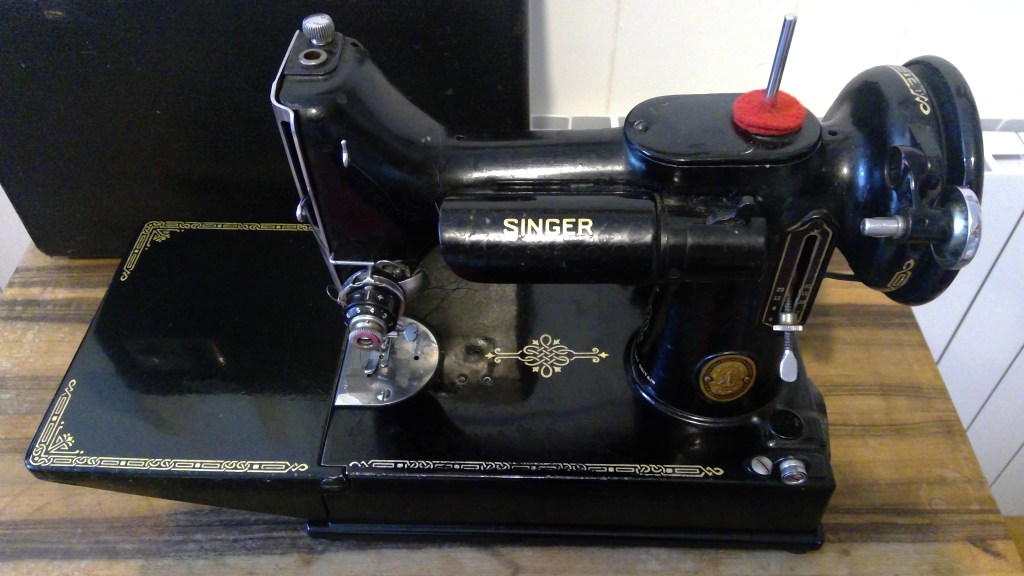
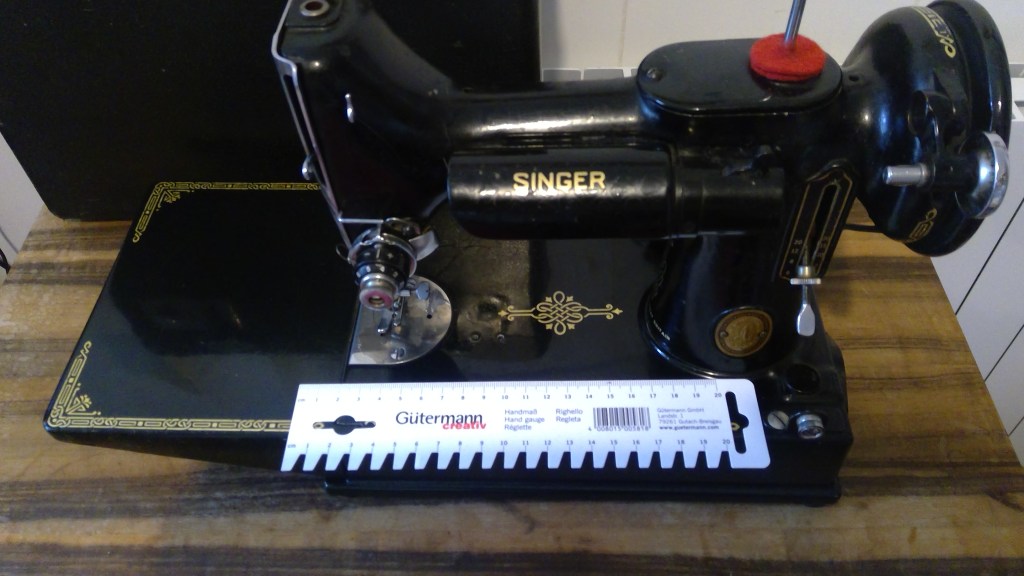
- Singer 221k (featherweight)…..Whats not to love…. I don’t think anyone can be in bad form sewing on this machine. Don’t let the size fool you, not only is it super light, its also super fast
- I got this machine for €40…which sounds like a bargain (and it was) but I also spent €190 on getting it repaired. I did get lucky as a charity shop asked me to test donated sewing machines to see if they were working and this one was in it…. and not working (cracked internal part). The lacquer is cracked and the chrome plate is distressed which is fine with me as it means I don’t treat it as a ‘museum piece’.
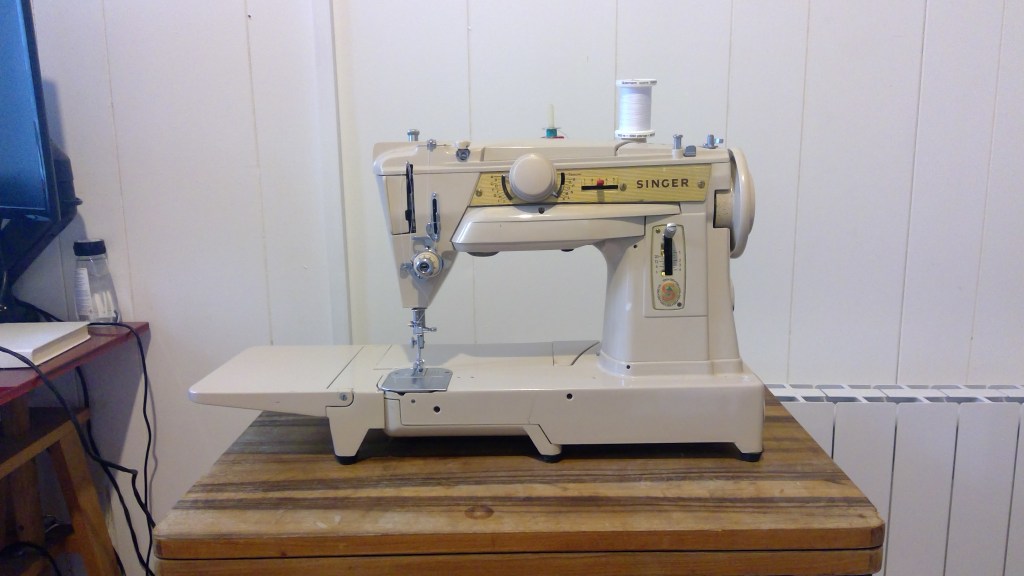
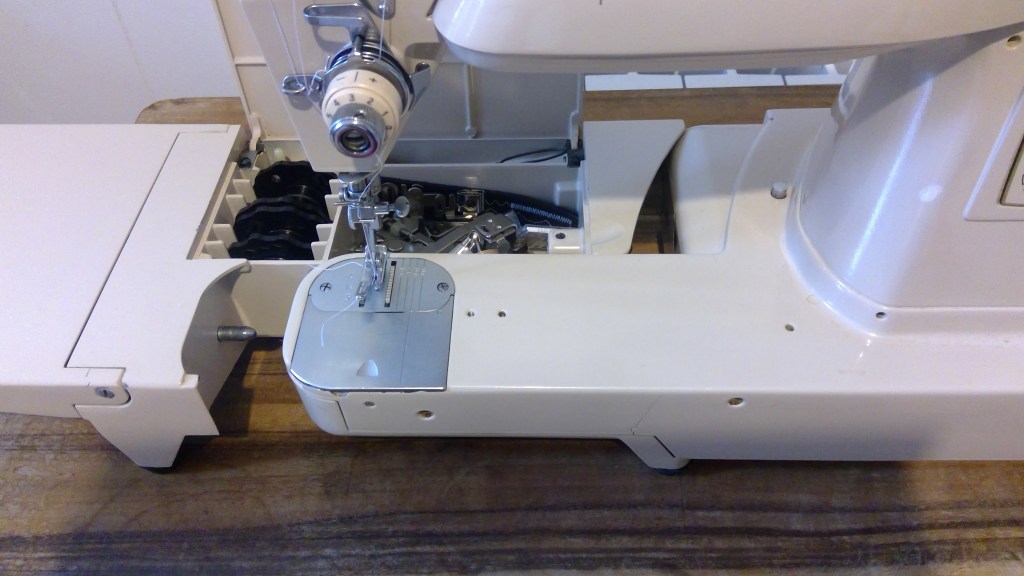
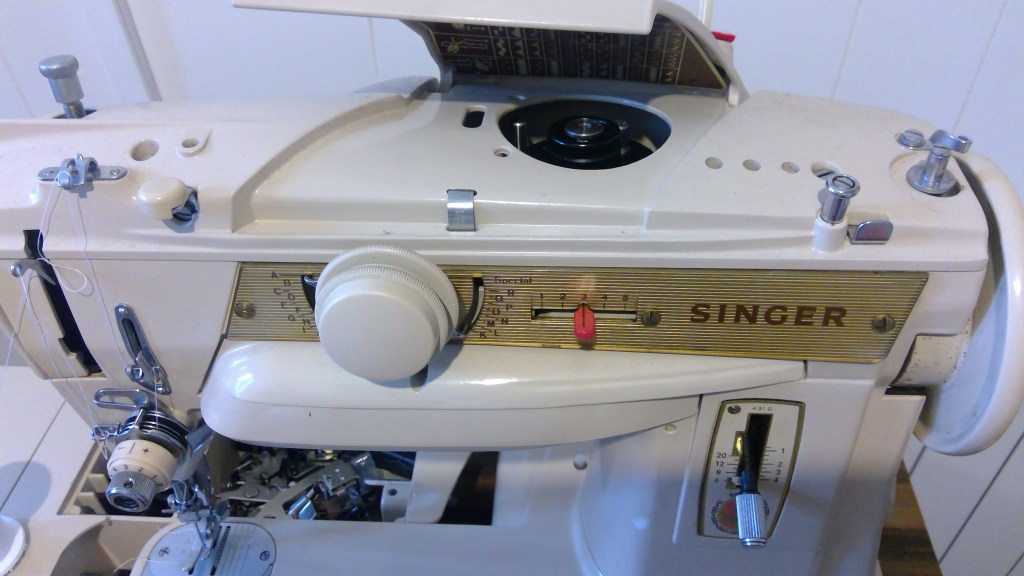
- Singer 431g – This is supposed to be the best engineered singer machine ever, very short production life so not as many around.
- This is the most I ever paid for a machine and its the newest in the workroom, so I am still getting used to it. I naively thought I would bring it to repair café as its so versatile but the cover is loose so I probably wont. Its super fast and very powerful. It has the capability to do chain stitch and I am sorry now I didn’t wait it out for one that came with a chain stitch plate (mine doesn’t). It has a free arm which I find much handier than the slide on plates, and I prefer the top loading bobbin…(even though this is not the best stitch).The free arm has a brilliant storage compartment, and stores the straight stitch plate, zig zag plate, darning plate, as well as cams and attachments.
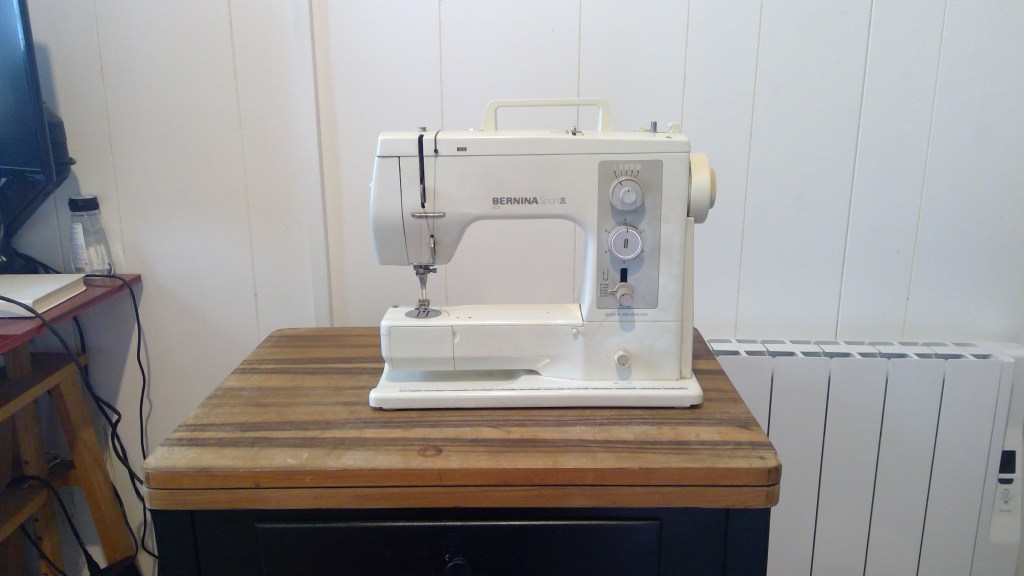
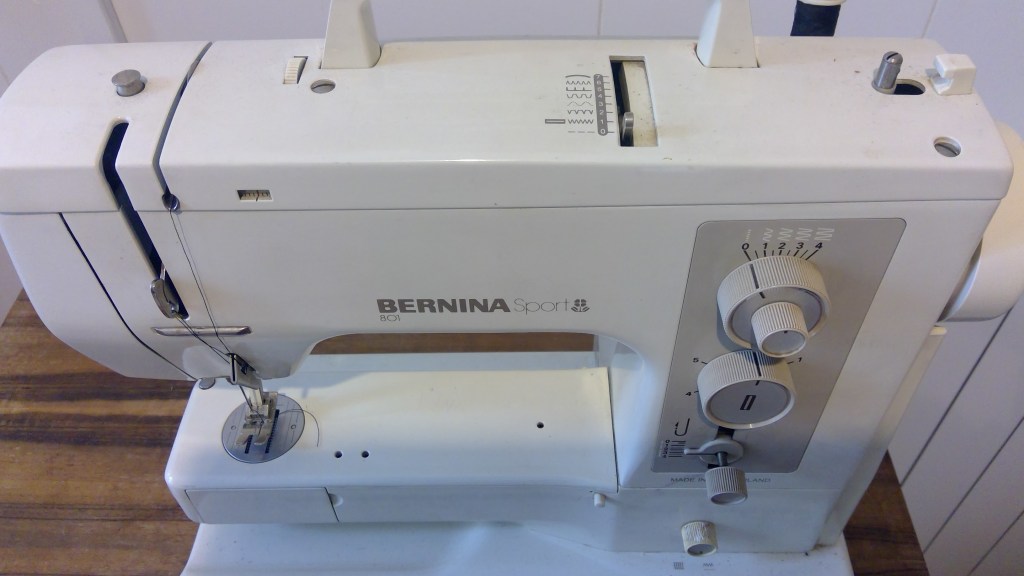
The Bernina Sport (1970s) -This is a super lively machine, has all the stitches you need. Like all berninas, this is wonderfully engineered and very very heavy. It takes old style feet.
This machine was ‘aunty nora’s’. Not my aunt but my husbands and the machine was left in the garage, so when I found out I insisted it was brought here. Sadly, it got damp in the garage so cost a bit to get the motor fixed. Now that it has been fixed, it sews super fast. Berninas are incredible machines. I hadn’t realised the feed dogs were stuck so next service I will see if that can be fixed in the next service. Ultimately, it still is not my machine so it will most likely be passed back if anyone gets an interest in sewing and using it.
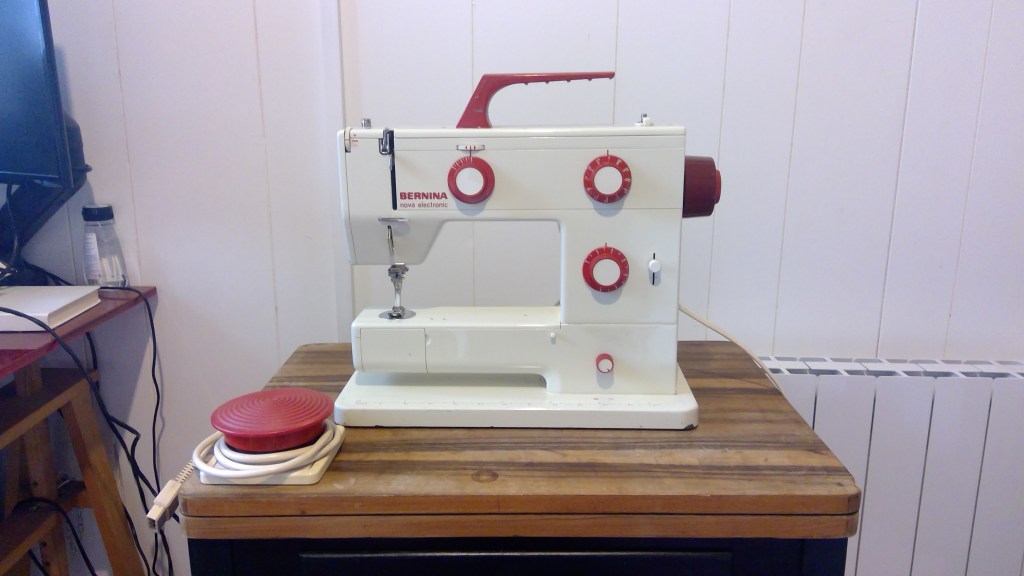
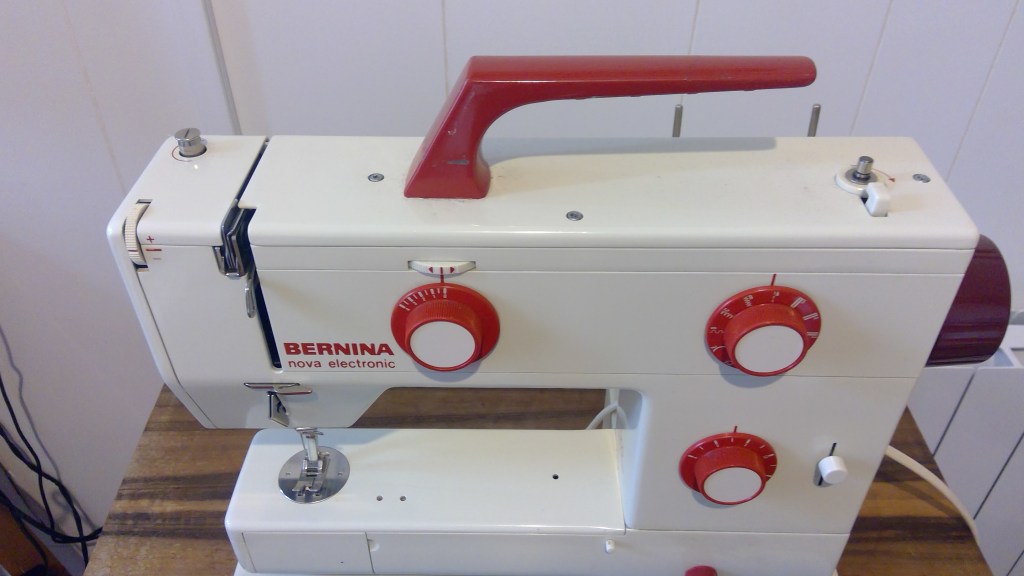
Bernina Nova – another beautifully engineered sewing machine. Something so exact about a Bernina…. I love the 80s look of this machine
I picked up this machine on eBay, and it was because I wanted a Bernina where the feed-dogs did drop. Recently I was watching the Alex Askeroff YouTube piece this machine and hadn’t realised some to the extra bits of ingenuity in it. 2nd hand berninas are always worth it. I did have a Bernina Minimatic and only sold it because Aunty Nora’s machine came to take up that shelf space. The Nova is my other go-to machine for most sewing. Funny thing is that it threads left then right (ie take up leaver is on the right of the tension).
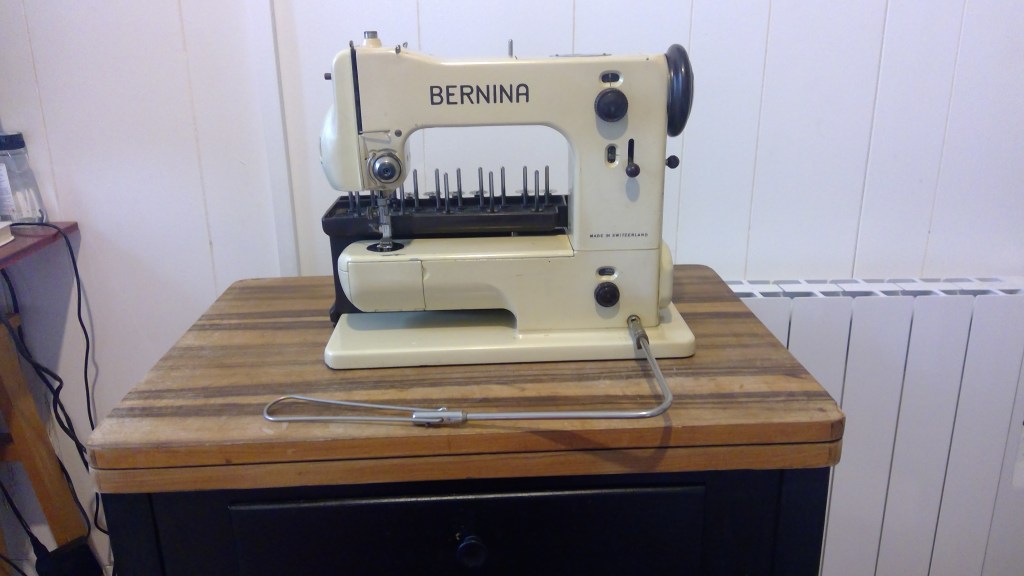
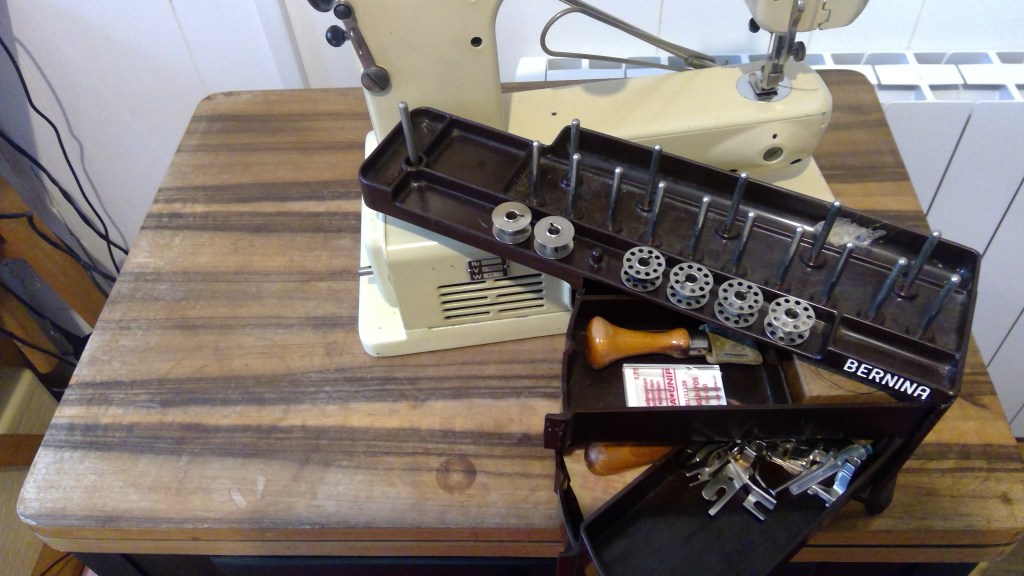
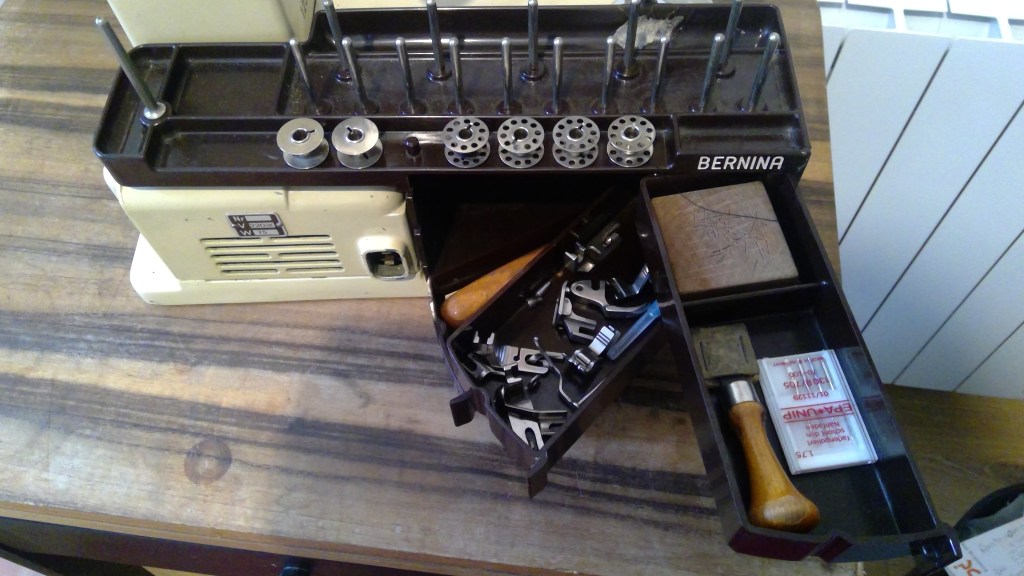
Bernina 125 – This was first home sewing machine with free arm and zig zag (actually think first zig zag) and was first manufactured in 1943… Think this machine is yet another from the mid-50s.
This was a machine bought on a whim…. It was on ebay and came from France…. I just really liked the look of it, and its another very compact model. It reminds me of the elna grasshopper because to the knee lift. I had a grasshopper some years ago but never cared for sewing on it – the sewing ‘table’ was too big – where as this one is so tidy.. It has a cute accessories tray which folds out, and it came with a good few accessories. It sews beautifully. I am still not used to sewing with a knee lift so have to do more practice sews on it. Like all berninas, super engineered and super strong. This one is a very tidy size. The feet on these are a short shank which go into an adaptor.
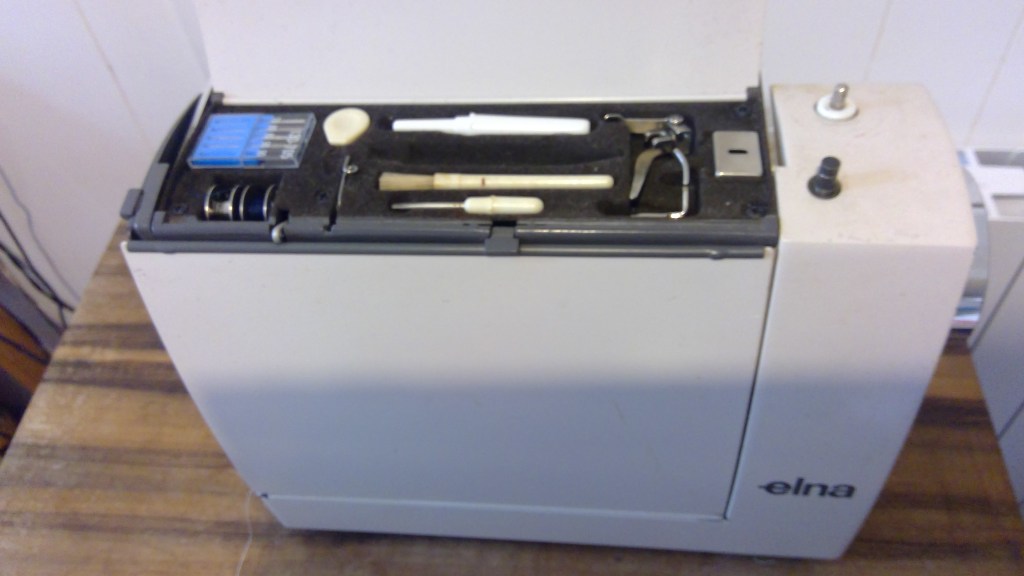
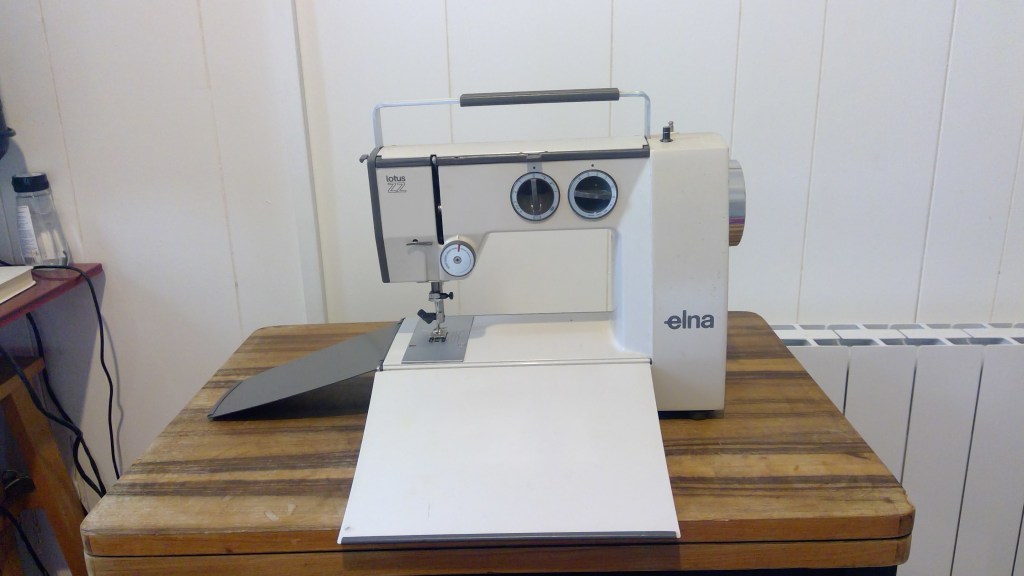
Elna Lotus – this machine is a design classic, theres one in MoMA in New York, so of course I had to buy one (I am that shallow). It may look small, but it is very very heavy for its size, and just look at the handy accessory storage.
I have this Elna about 7or 8 years? and I think was about 80 euro including p&p. It came from a hospital charity shop in the UK and still strangely smells of hospitals even to this day….I am not kidding. It has the nicest stitch of all my machines, but I don’t sew on it often because the fold out plates get in the way.
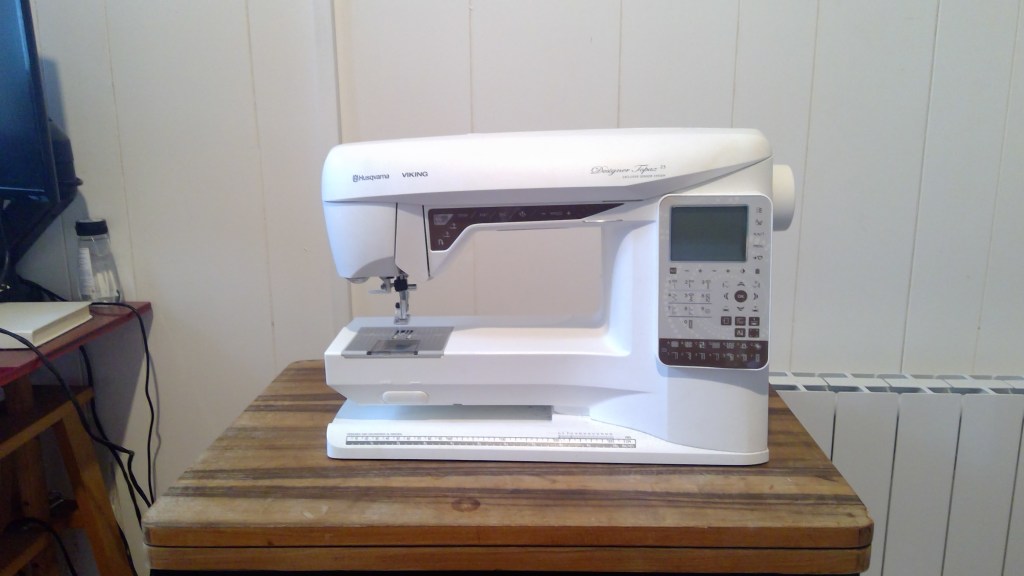
Husqvarna Topaz – this is the most modern of the bunch and it also does computerized embroidery.
I got this machine to sew my nieces irish dancing costumes. It was big money at the time, but so were irish dancing dresses. I was also delighted with it as it has some useful features like bespoke buttonholes etc. It is a good machine, but I don’t sew on it as much anymore. The push button for raising and lowering the presser foot makes no sense to me… its too hands off and I prefer my manual machines….However, I don’t feel I should sell it as it is probably worth more to me as an occasional machine and embroidery machine than to sell it on.
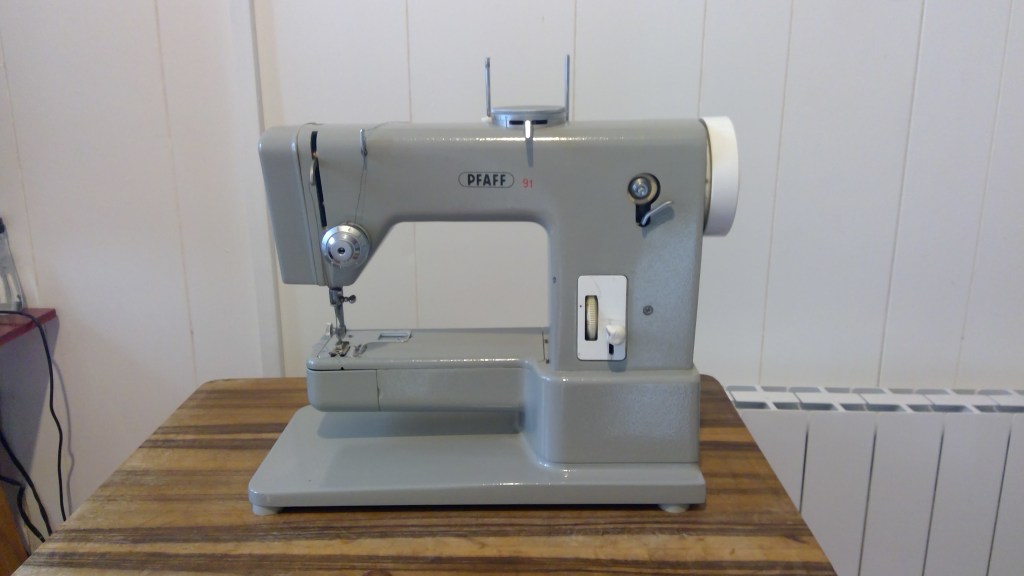
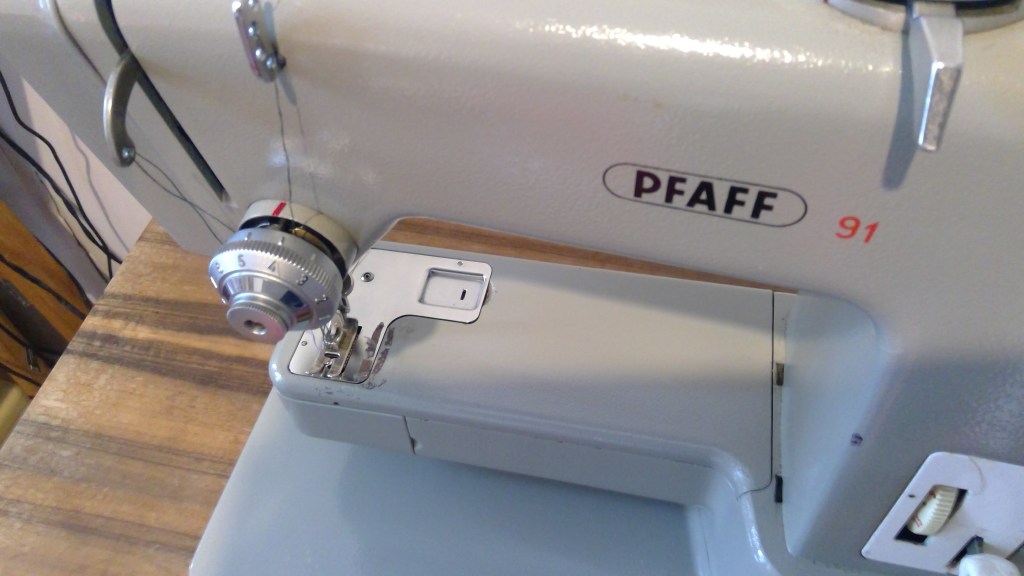
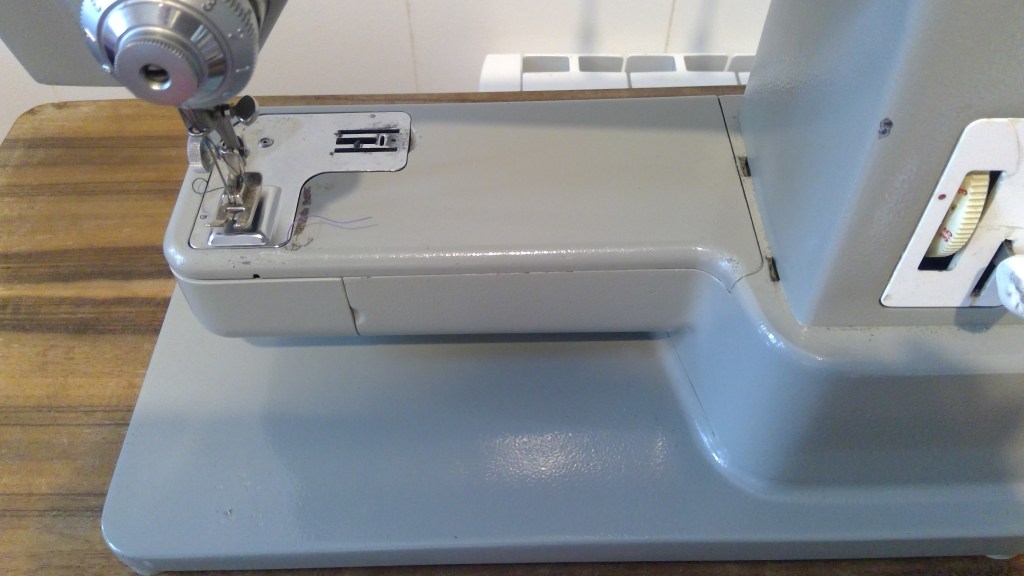
Pfaff 91 – (1960s) I always liked the pared back design look of this machine. It does what you need, straight stitch, zig zag and the sewing plate can be flipped over so it’s a darning plate, which is incredibly hand.
I have this machine a long time. It is a solid machine and has a nice look to it. It came with the manual and all the accessories I don’t sew on it so much and actually had it on loan to a friend during covid that I nearly forgot it was mine. Its back now, and I bring it to sewing class as the spare machine as these metal machines are unbreakable and its also currently the go machine for the repair café.
So thats the lot…. except there are a few more including my original 1989 Singer Excelle. These other machines I have been picking up and will be using for teaching upcycling workshops this year… and will be doing a blog post on them!
 upsew
upsew 
If you don’t like the fold out plates
LikeLike
I do sew occasionally with the elna, but the fold out plate at the front means the machine sits slightly further away….I may try removing them the next time as I know they can be with the 2 screws but this does feel like dismantling it…….
LikeLike