I have been thinking a lot on sumptuary laws – partly because I am doing some research for a planned project on 17th Century dress, and partly however much changes, so much stays the same.
The first example of Sumptuary laws is a curious one
A free-born woman may not be accompanied by more than one female slave, unless she is drunk; she may not leave the city during the night, unless she is planning to commit adultery; she may not wear gold jewellery or a garment with a purple border, unless she is a courtesan; and a husband may not wear a gold-studded ring or a cloak of Milesian fashion unless he is bent upon prostitution or adultery. (Source ‘Wiki’ – The 7th century BCE law text of the Locrians by Zaleucus)
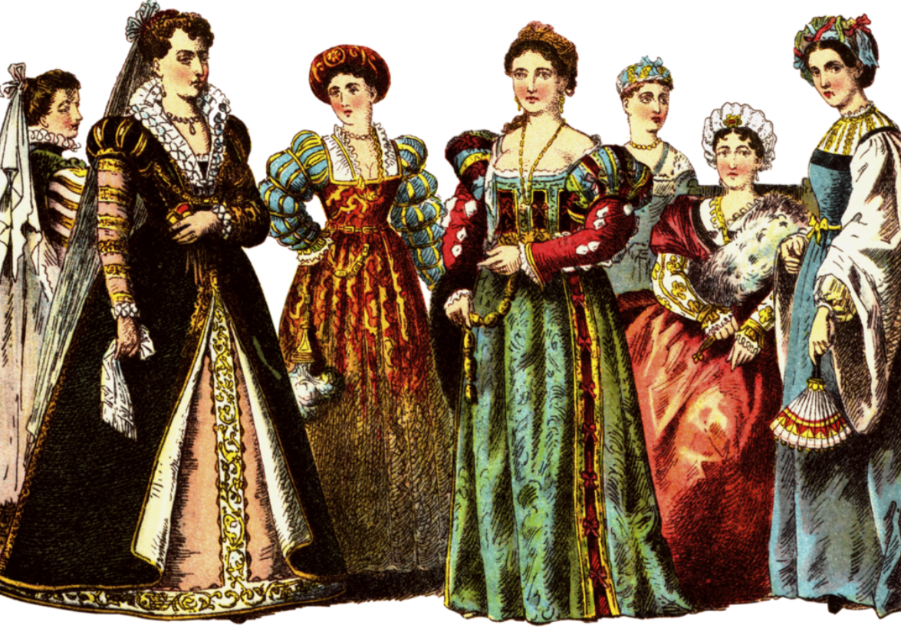
Tudor Era Sumptuary Laws Definition & Social Hierarchy
In general, sumptuary laws are regulations designed to restrict luxury and extravagant consumption, often to reinforce social hierarchies, moral standards, and economic control. So the poor people couldn’t wear fancy clothes, even though they made them… and only royals could wear certain colours and fabrics to show how wealthy they were.
The one I started researching was how under Elizabeth I – In Ireland, wearing of traditional woollen mantles, “open smocks” with “great sleeves”, and native headdresses was banned and Irish people were required to dress in “civil garments” in the English style. I am sure other cultures (colonised or not) have had their traditional dress banned either by law or by stealth.
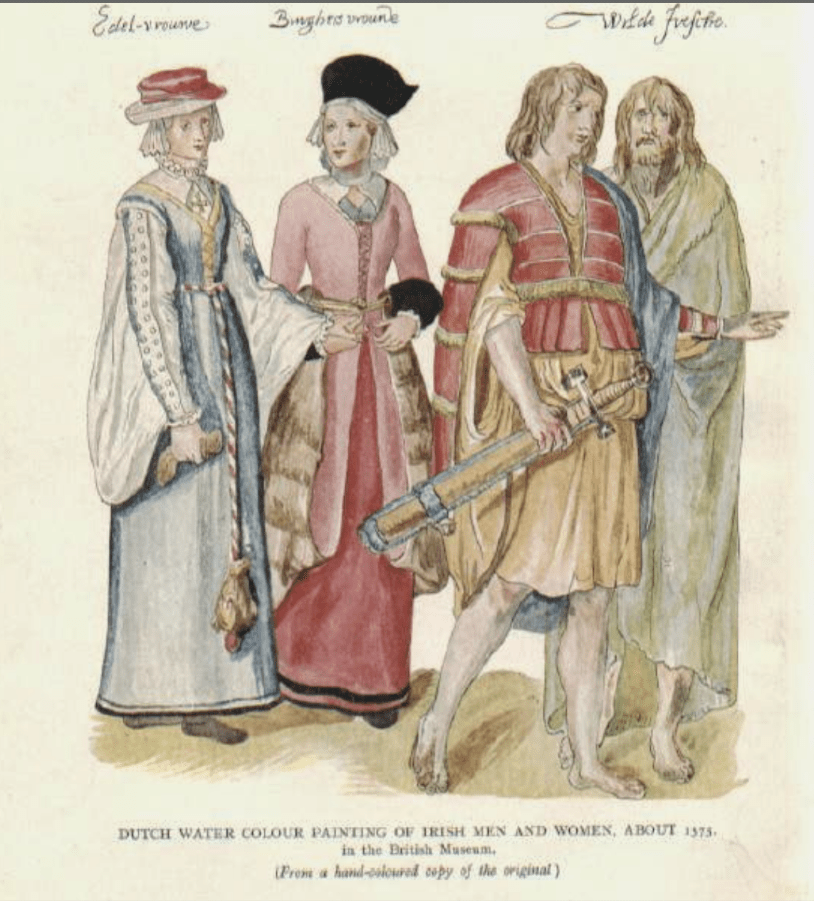
Matsukaze Workshops: 16th Century Irish Dress
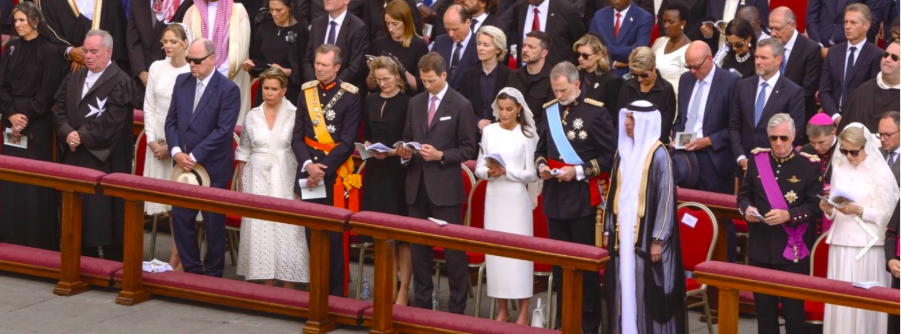
One traditional sumptuary law that endured is ‘the privilège du blanc’ (“the privilege of white”) is a custom of the Catholic Church that permits certain designated female royalty to wear white clothing (traditionally a white dress and white veil) during an audience with the pope. It is an exception to the traditional requirement of women to wear black garments on formal occasions. Newspapers seem to love this one (Photo – royalwatcher.com)
Modern Sumptuary seems to have flipped everything on its head. Historically sumptuary laws banned imports to protect local linen and wool industry – and now we do the opposite (Hello Shein Crap). Historically mended garments were seen as shabby whereas now we are shown examples of King Charles gets his clothes mended (although this is still all a bit niche). Celebrities are applauded for outfit repeating, and yet a lot of people will still feel under pressure to buy something new for a wedding, despite having clothes that they already love, feel comfortable in and fit them, in their wardrobe.
Modern Sumptuary seems to be based on social shaming and slick marketing (I am omitting religious and cultural choices here)
1. Too short, too tight, too provocative, too young
Your dress is not too short, your outfit is not too provocative. If anyone thinks otherwise, they’re probably just a pervert’ Kathri Gebel German Member of Parliament
2. you can’t wear the same outfit to a different wedding/party/whatever
Your outfit was chosen by you and shows your sartorial style. If someone else is keeping tabs on your outfit repeating – this is not the validation you need.
3. cheap is good
Cheap is nasty and most likely a horrible synthetic coated in chemicals, and made in horrid conditions, and responsible for at least 8% of emissions.
4. must have micro trends
Fashion is a form of ugliness so intolerable that we have to alter it every six months (Oscar Wilde). Micro trends are designed to fall apart in two weeks
5.Treat yourself, you deserve it (pay day buy)
You deserve good quality clothing and not being conned into a once a week buy. You deserve natural fibres, and well made, clothes that are designed to be laundered and worn a whole heap of times, and that you feel comfortable in. This is your money and should not be used to make some fast fashion company richer
Any rules to add here?
 upsew
upsew 
I have no pithy comment to make, but thank you for an interesting read!
LikeLiked by 1 person
you are welcome! I wasn’t going to write anything on it originally but it kept staying in my head… so many rabbit holes to get lost in…… I still havnt read up on the few people who used ‘dress about their station’ and happily paid fines to do so!
LikeLiked by 1 person
Fascinating! I did not know there were laws like this. Except the one about only the wealthy getting to wear colour. But when I think about it, of course! There are examples all around us in recent times.
LikeLiked by 1 person
I know – which makes me want to disobey all the rules!
LikeLiked by 1 person
When I was working with brides, if they had sisters who were also getting married, they insisted that their mother never wear the same dress to each wedding, so mom had to buy something new for each daughter’s wedding. Silly really but they always got their way.
LikeLiked by 1 person
I’m sorry I was not signed in and so it says I was anonymous but I’m Mrs Mole. Love your blog posts!!!!
LikeLiked by 1 person
Hi Jo Ann! the wedding trap is such a big one isnt it. One of my work colleagues years ago had to go to 10 weddings one year (we all sympathised in work!). It was in the same ‘circle’ she wasnt inclined to outfit repeat – to be fair, she did get a good few ‘loans’ but even the band width of then having to think on shoes and bags! I can see how we would all fall into it, especially now as there are photos….
I would feel doubly sorry for any mother of the bride as sometimes the choices given to women over 40 leave so much to be desired between fit and fabric choice. Dont know if you look at ‘house of peaches’ on facebook or insta – she does skits on a lot of this, and a recent one was where she and her friend went to a mall to try on ‘wedding guest’ outfits!
LikeLike
I’m sorry my comment says anonymous but there was no place to sign in as Mrs Mole….ha ha.
LikeLiked by 1 person